Frameshift reads your journal in real time and serves a live cockpit — trading, exploration, engineering and mission planning — from your PC to any paired tablet or browser. Local-first: no account, no API key, no cloud.
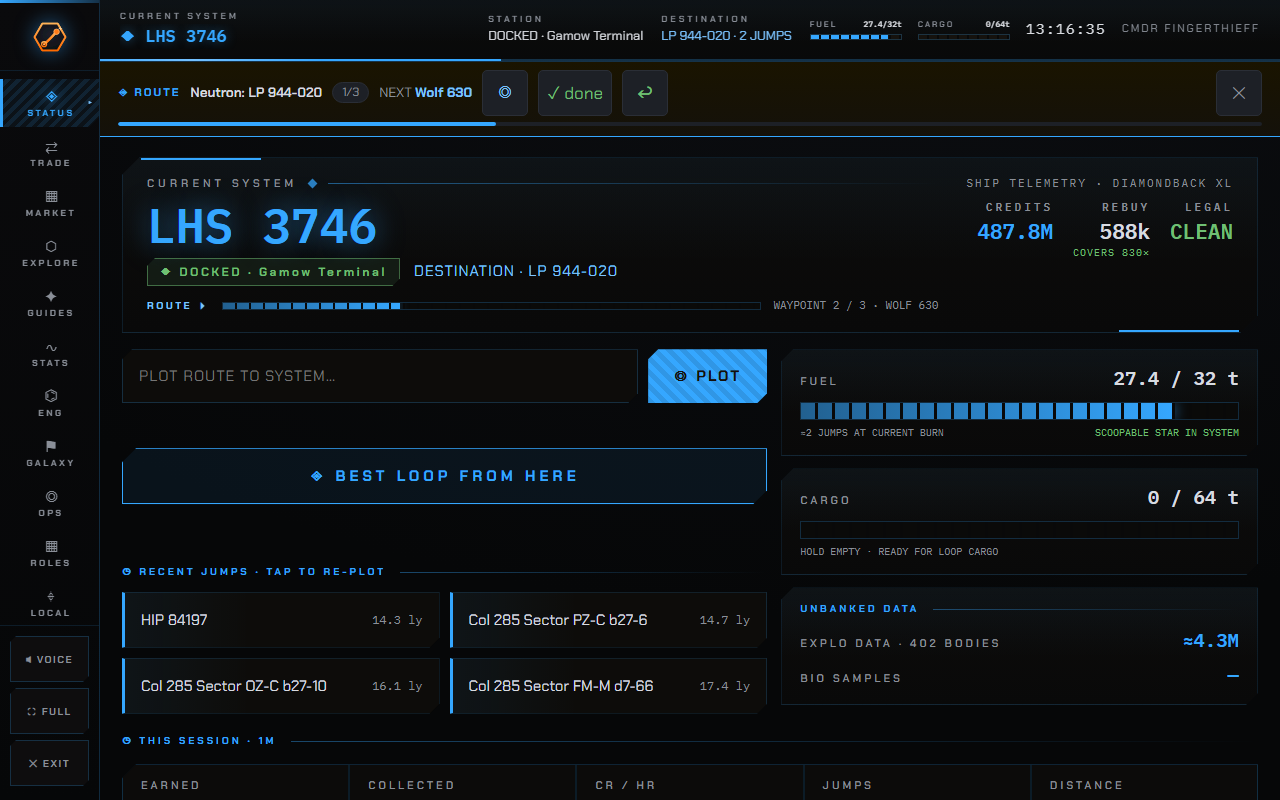
Free & open source (MIT) · Windows exe, or run from source on Linux & Steam DeckReal-time flight status from your journal: fuel, cargo, rebuy cover, missions, exploration value at risk — with focused voice callouts and one-tap autoplot that types the route into Elite with your own keybinds and verifies it against NavRoute.json.
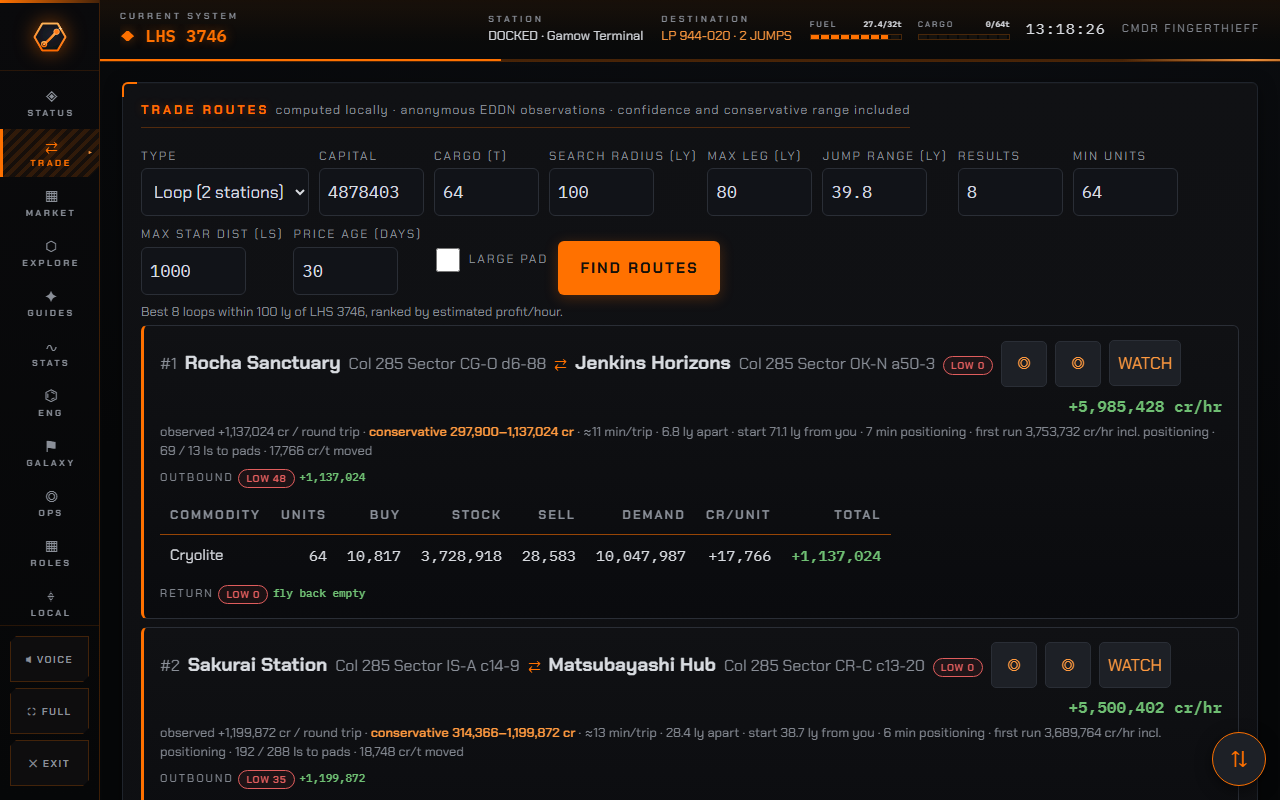
A local galaxy market database (Spansh seed + live EDDN) answers loop and multi-hop searches in seconds, ranked by profit per hour with an honest confidence score and conservative range on every result. Commodity search, mining buyers, price history, persistent watches.
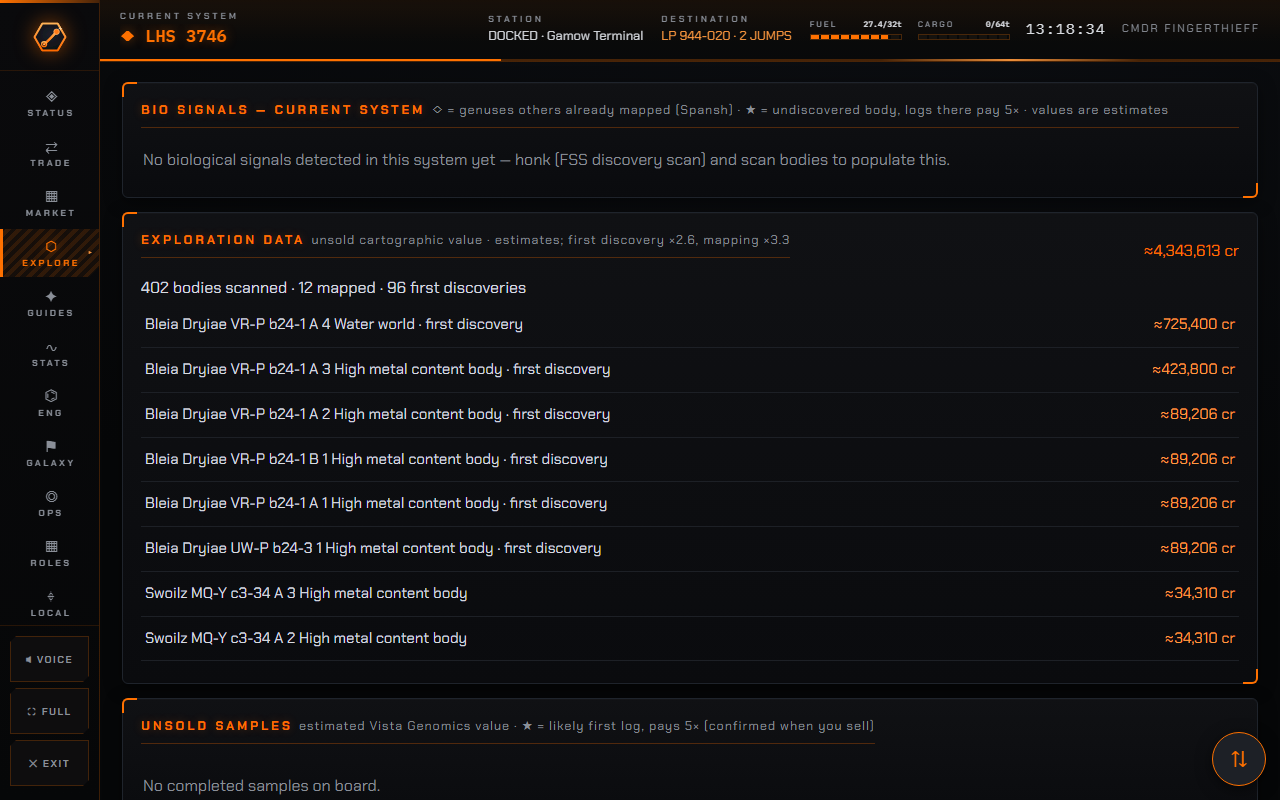
Road to Riches, neutron routing, bio prediction with community-known signals, first-log ×5 estimates, a surface sample navigator with clearance distances, sell-data finder and per-body waypoint maps that survive restarts.
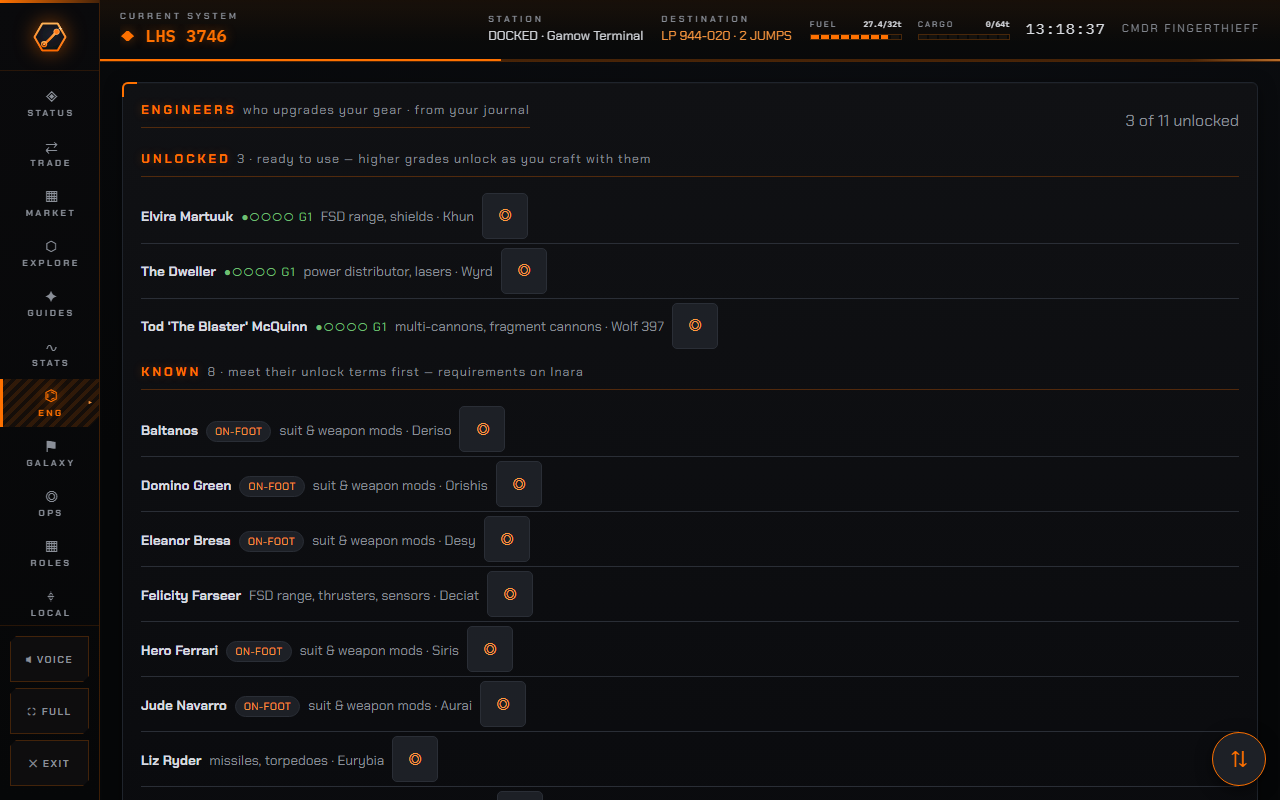
A complete offline catalog — 1,100+ recipes: ship blueprints, experimentals, engineer and tech-broker unlocks, Odyssey upgrades. Wishlists with material deficits, trader math and pinned-plan steps that feed straight into your session plan.
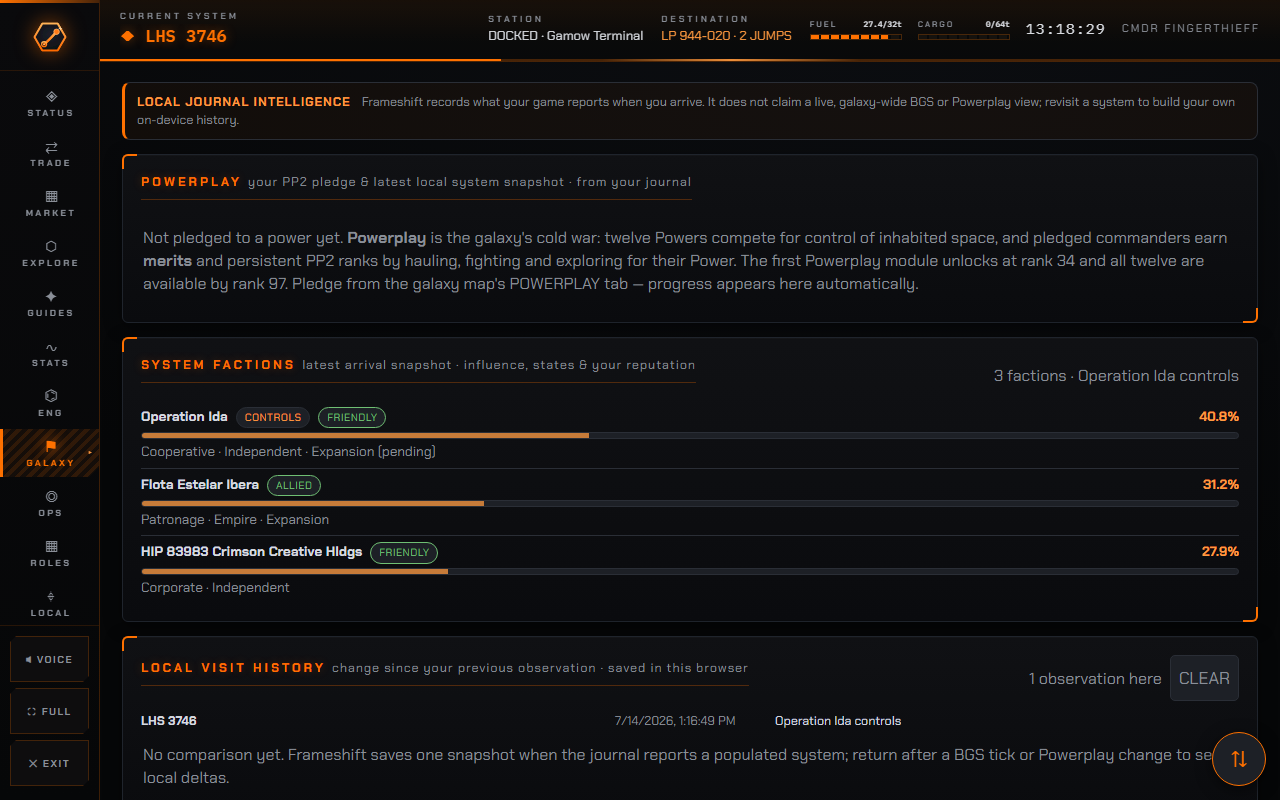
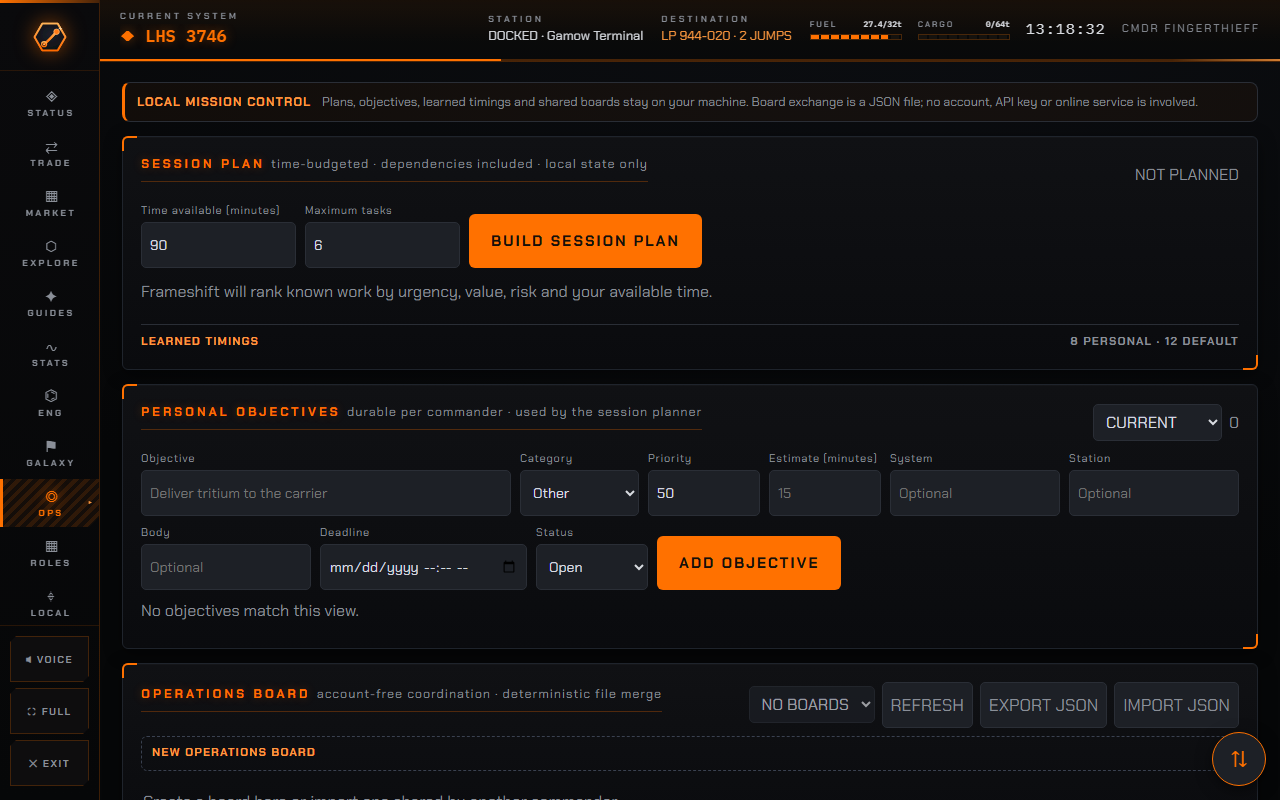
Powerplay 2.0 pledge and merits, BGS factions, conflicts and reputation on every arrival — plus a time-budgeted session planner that turns missions, deadlines and pinned work into a plot-ready plan using durations learned from your own flying.
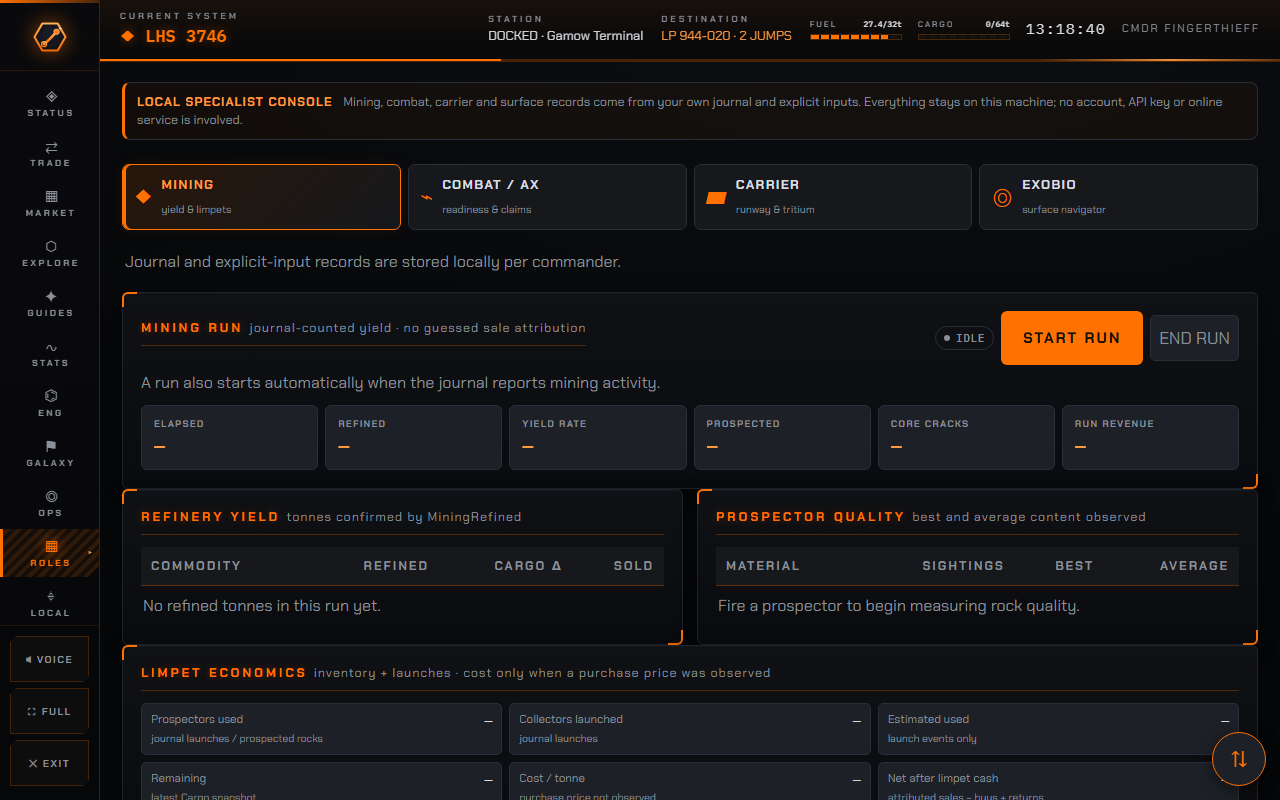
Dedicated flows for mining sessions, combat & AX readiness, fleet-carrier upkeep and tritium routes, colonisation hauling with parallel source-finding, and shareable squadron ops boards — exchanged as plain JSON files, no service involved.
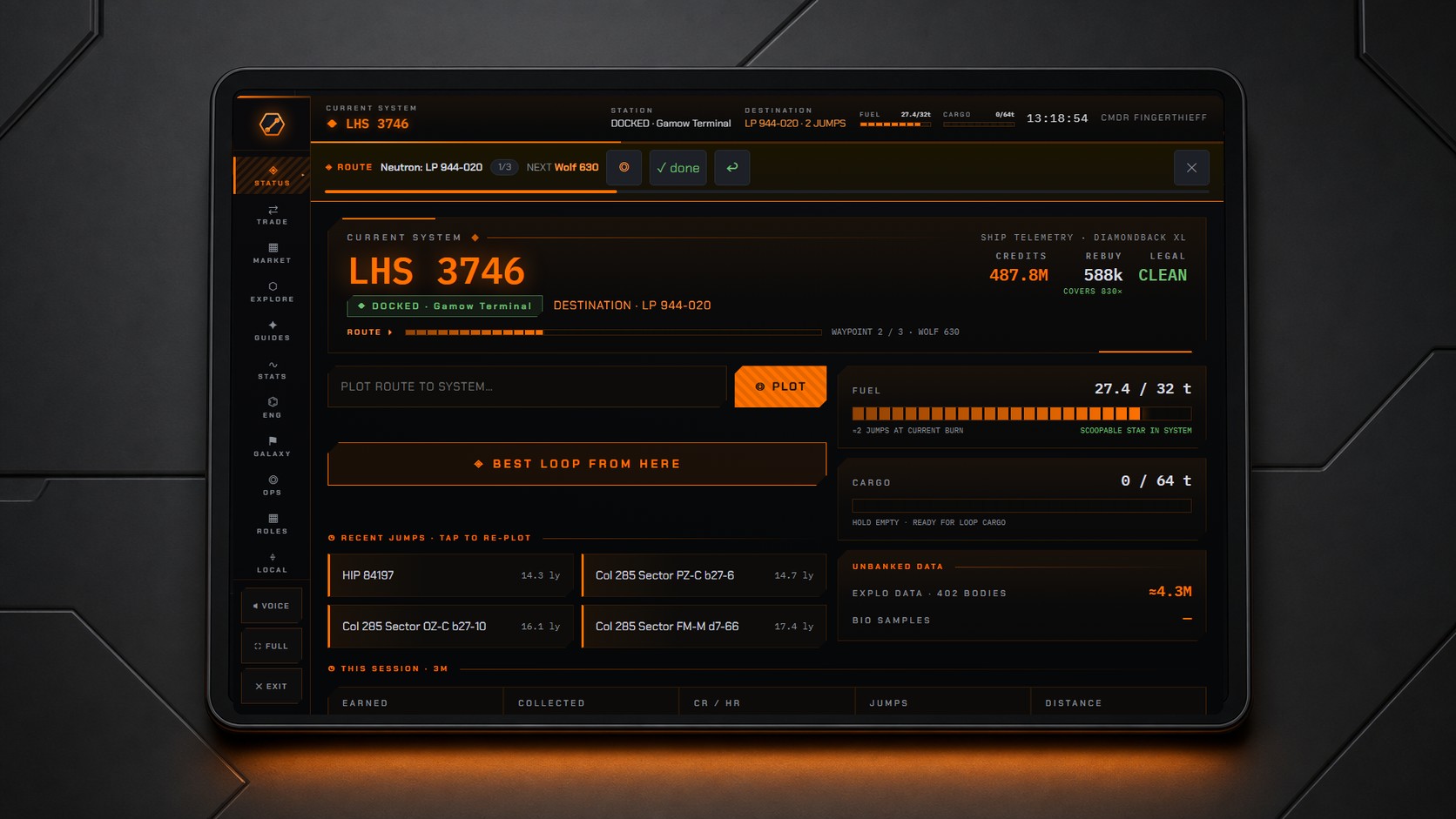
No waiting on a website: the whole galaxy's markets live in a local database kept fresh by EDDN.
Factions, influence, states, conflicts and your reputation — captured from your own journal on arrival.
Local Mission Control ranks your known work by urgency, value, risk and the time you actually have.
From Road to Riches to Vista Genomics: plan the route, find the bios, protect the payout.
Every engineer, every recipe, every material — offline, on your machine, aware of your progress.
The ROLES console switches the cockpit into dedicated mining, combat, carrier and surface workflows.
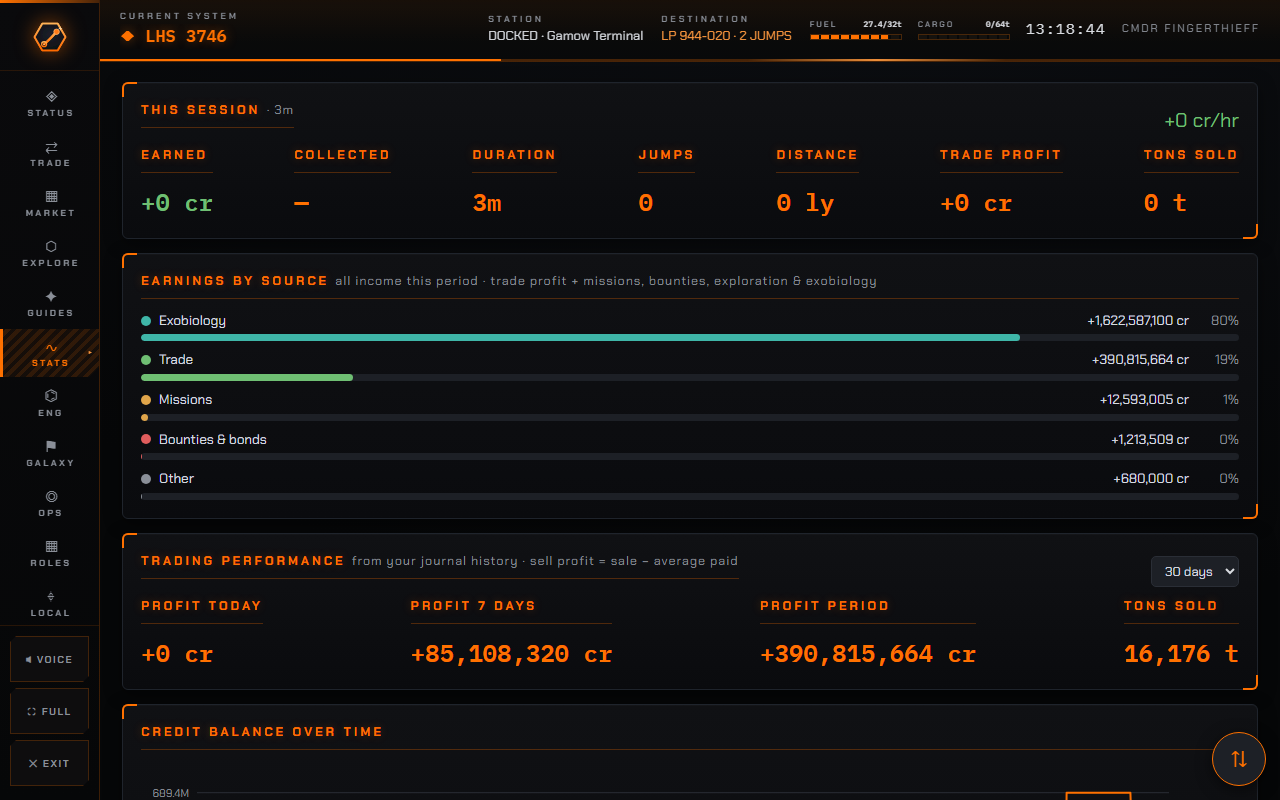
Every credit accounted for, computed from your own journal history and never uploaded anywhere.
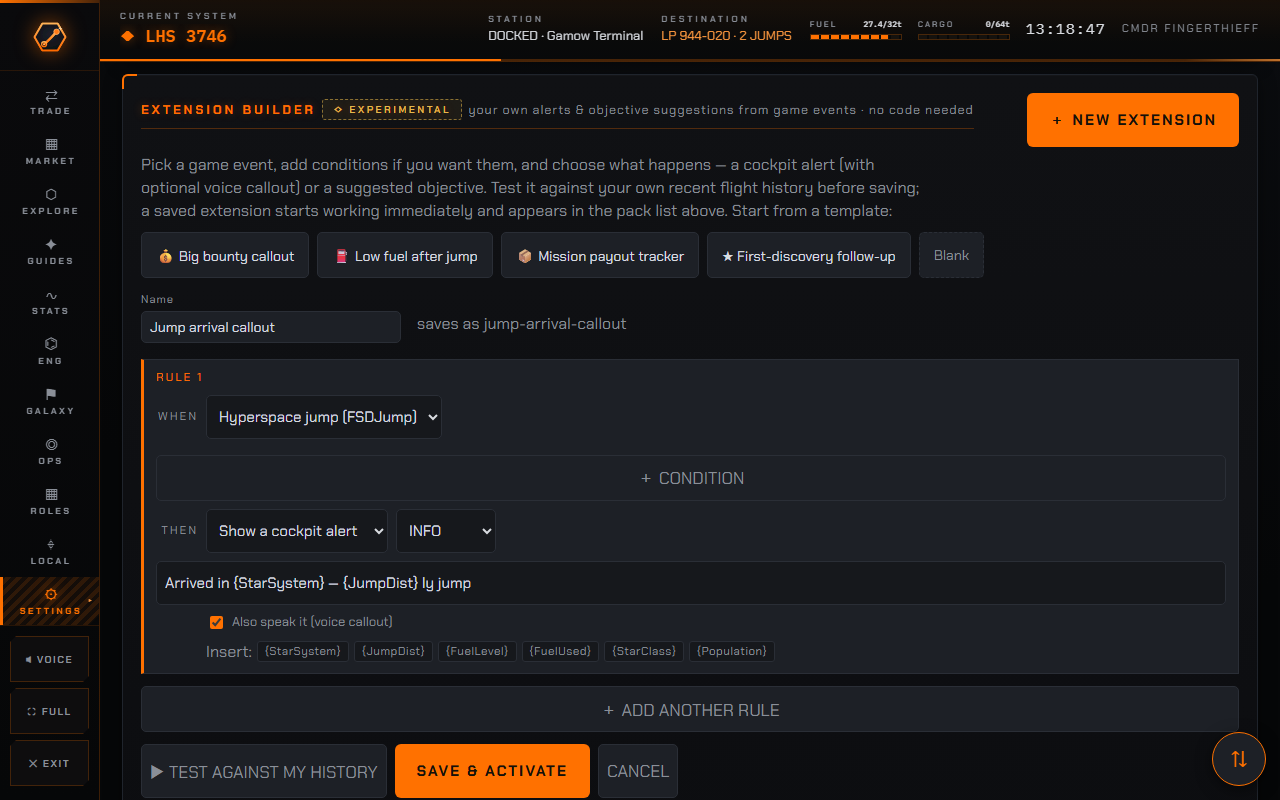
The experimental extension builder turns “I wish it told me when…” into a working alert in about a minute.
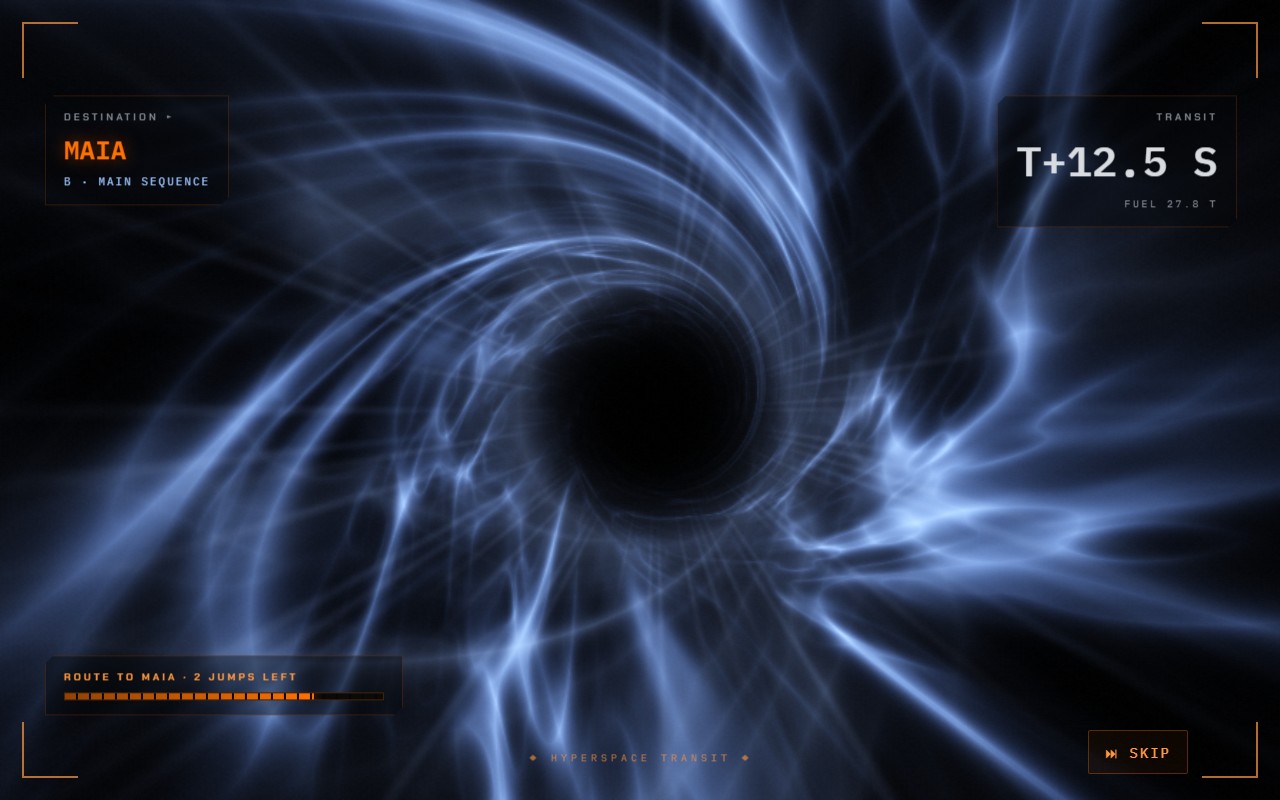
When your drive commits to a hyperspace jump, the panel jumps with you — countdown, witchspace tunnel and arrival reveal, live from the journal.
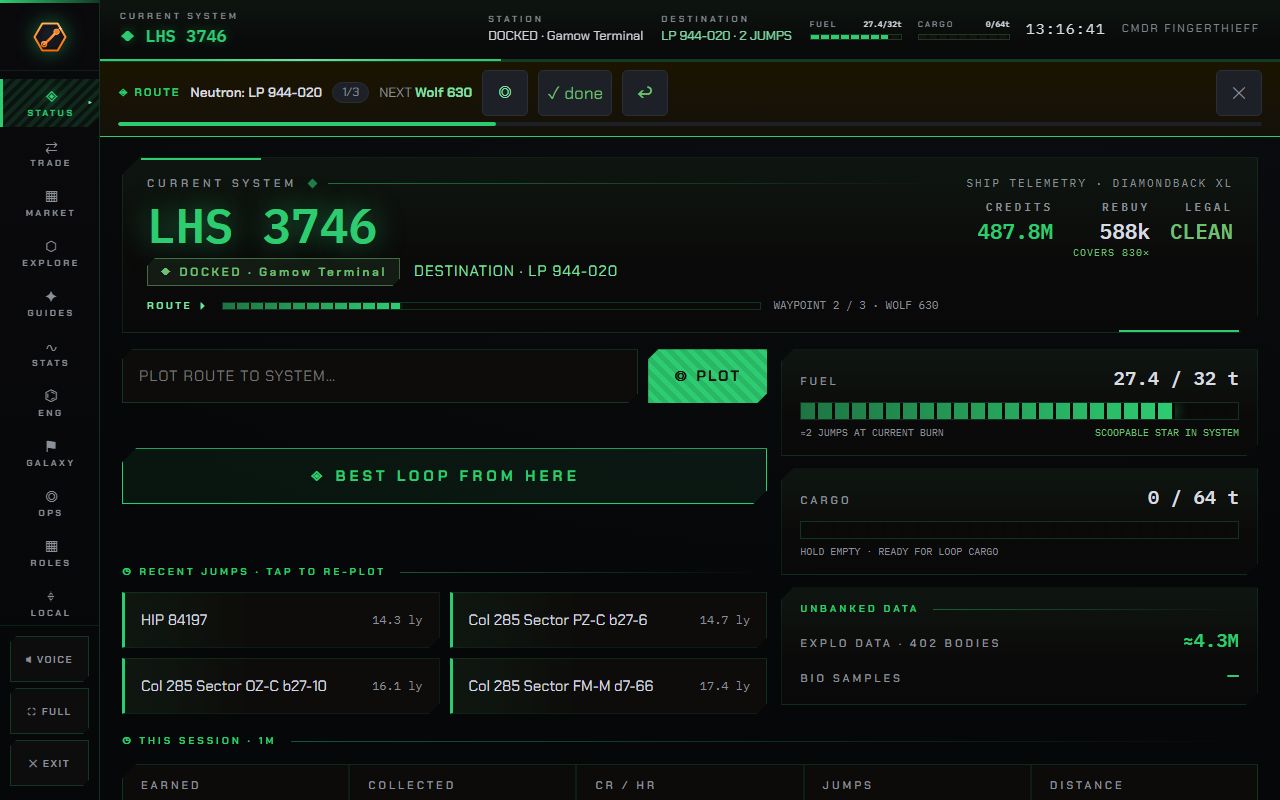
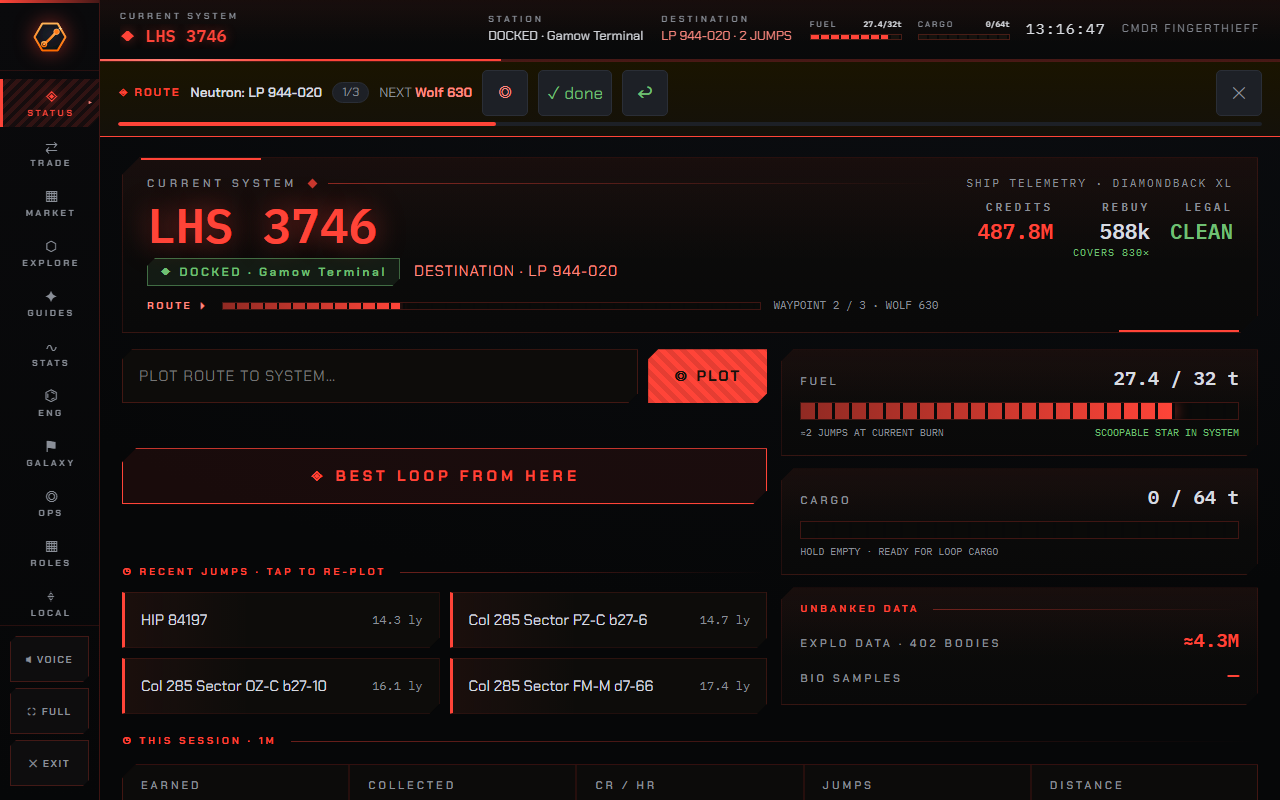
Every page above is the touch-first flight panel — the view Frameshift opens with. Prefer a mouse? The same app also serves a full desktop workspace with every card in tabbed form.
One Windows exe (or run from source on Linux/Steam Deck). It finds your journal folder and commander automatically and keeps itself updated.
One click in Settings downloads the galaxy snapshot; live EDDN keeps it fresh from then on. Trading, mining and station search unlock galaxy-wide.
Scan a one-time QR code from Settings. The tablet gets the touch-first Panel view with its own pages, themes and permissions — revocable any time.
No account, no API key, no cloud dependency. Commander history, plans and settings live on your disk, separated from the rebuildable market cache, with automatic backups.
Anonymous market observations go back to EDDN by default; broader exploration reporting is a separate opt-in, validated against the official schemas.
Runs happily alongside EDMC, Inara, EDSM and friends — links out to them rather than pretending they don't exist.
Local extension packs can react to journal events declaratively — no code execution unless you approve an adapter's exact fingerprint.
Frameshift exists because the Elite Dangerous community shares its data: EDDN live observations, Spansh galaxy data and routing, Inara and EDSM reference links, and EDCD schemas and documentation. Bundled open-source work: EDEngineer reference data, Project Nayuki's QR generator and Piper TTS. If these projects help you, support them.